












AP European History
Date & Time
Instructor
Grade Level
In AP European History, students investigate significant events, individuals, developments, and processes from approximately 1450 to the present. Students develop and use the same skills, practices, and methods employed by historians: analyzing primary and secondary sources; developing historical arguments; making historical connections; and utilizing reasoning about comparison, causation, and continuity and change over time. The course also provides seven themes that students explore throughout the course in order to make connections among historical developments in different times and places: interaction of Europe and the world, economic and commercial development, cultural and intellectual development, states and other institutions of power, social organization and development, national and European identity, and technological and scientific innovations.
This class will meet twice per week: one 90-minute class to cover content, and one 60-minute lab to work on history skills.
There are 4 parts to the AP European History Test: multiple choice questions, short answer questions, long essay, and the document-based-question. The 2026 AP European History exam will be fully digital. Parents are responsible for securing a local testing site for the AP test. Even if students choose not to sit for the AP Exam, this course will demonstrate rigor as well as prepare students for college level work.
College Course Equivalent: AP European History is equivalent to a two-semester introductory college course in European History or Western Civilization. You can learn more about rigor and its depiction on a homeschool transcript at UNDERSTANDING COURSE CREDIT & GPA ON A HOMESCHOOL TRANSCRIPT in our Family Handbook.
There are no prerequisites for AP European History. Students should be able to read a college-level textbook and write grammatically correct, complete sentences.
Please view prerequisites and required supplies below.

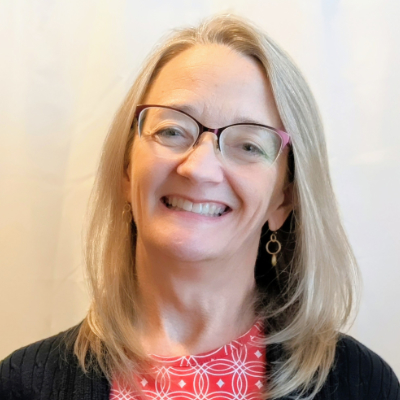
Susan Eggers loves learning about the past and the people of our world, and sharing that love with her students. She attended Wake Forest University as a William Louis Poteat scholar, where she earned her B. A. in History, graduating magna cum laude. Continuing her studies at the University of North Carolina at Chapel Hill, she received her M. A. in Russian history and completed additional hours of graduate coursework toward a Ph. D. While in graduate school, Susan received grants to conduct research in the Lenin Library and the Russian State Archive of Literature and Art in Moscow, the National Library and the Russian State Historical Archive in St. Petersburg, the Slavic and East European Library at the University of Illinois, and the Library of Congress in Washington, D.C. She has presented conference papers across the country and has published several articles on Russian history.





Reviews
There are no reviews yet.